English| EUR
Suggested for you
More currencies
Choose a language
Ethical elephant tourism hinges on whether sanctuaries prioritize animal welfare over entertainment. Elephant Jungle Sanctuary Chiang Mai operates under a no-riding, no-chains philosophy, allowing rescued elephants to live in open forested areas. Understanding what separates responsible sanctuaries from exploitative attractions helps visitors make informed choices.
Quick answer
Elephant Jungle Sanctuary Chiang Mai meets core ethical standards by prohibiting elephant riding, using positive reinforcement training, and providing natural forested habitats for rescued animals. The sanctuary operates with a 1,900 THB conservation fee that funds veterinary care and habitat maintenance. Visitors observe elephants in semi-wild conditions rather than staged performances, though all tourism involves some level of human-animal interaction that requires ongoing welfare assessment.
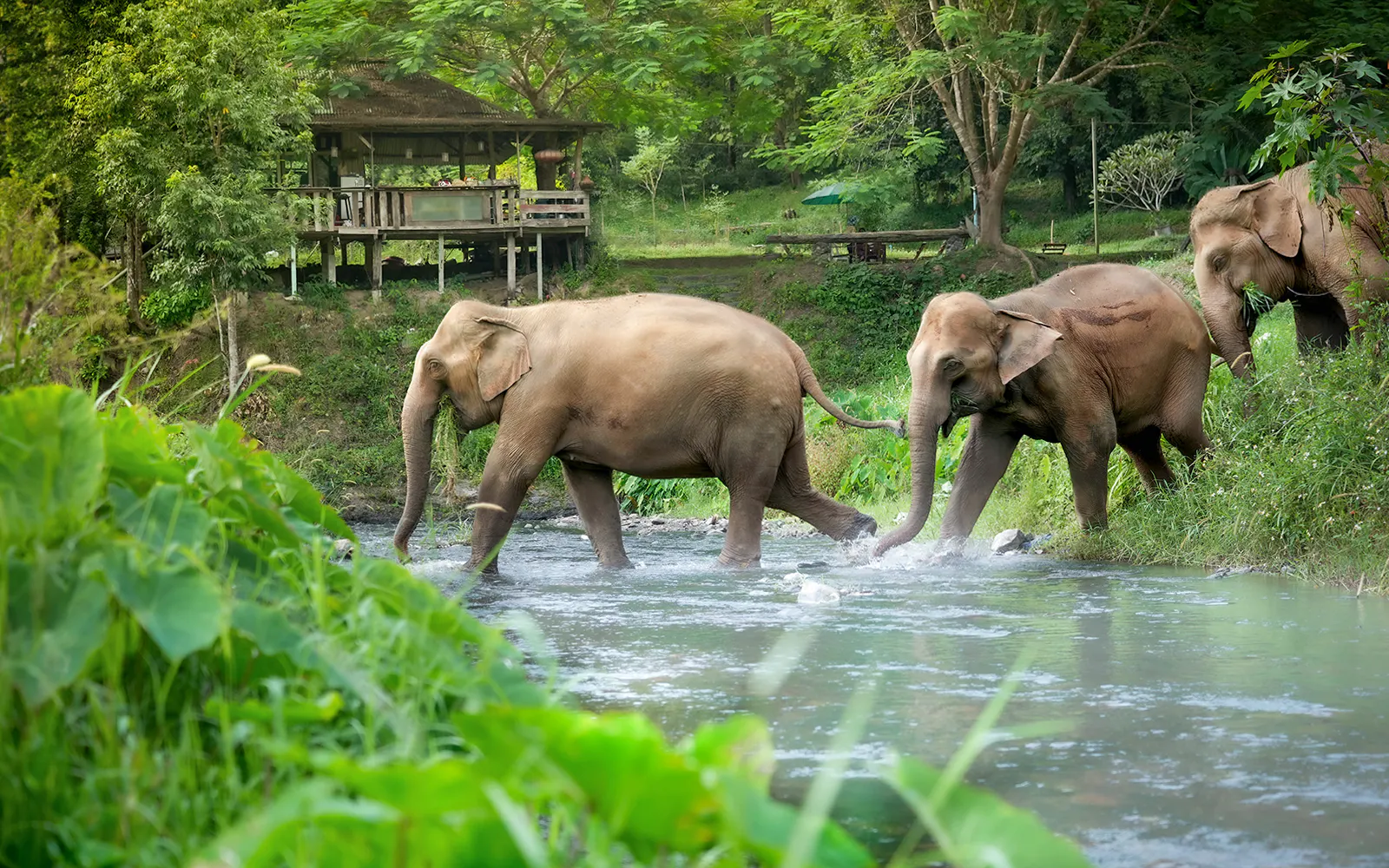
Elephant Jungle Sanctuary rescued its first animals from logging and street-begging operations in 2014, establishing a model that would grow across northern Thailand. The sanctuary now houses elephants across multiple sites, each designed to replicate natural herd dynamics without the bullhooks and chains that defined earlier tourism models. Whether is Chiang Mai elephant sanctuary ethical depends on measurable welfare indicators. The facility prohibits riding, eliminates forced performances, and allocates multiple acres per elephant for roaming. Mahouts trained in positive reinforcement replace the traditional dominance-based methods that caused physical and psychological harm. Veterinary protocols include regular health checks, dental care, and treatment for injuries sustained during the animals' working years. Bathing activities occur in mud wallows and streams where elephants naturally cool themselves, not concrete pools built for photo opportunities. The conservation fee structure directs resources toward long-term care rather than profit extraction. Each 1,900 THB visitor contribution covers fodder costs, medical supplies, and land management. The sanctuary sources food from local farmers, creating economic incentives that reduce human-elephant conflict in surrounding villages. Transparency remains partial—the facility does not publish independent welfare audits or detailed financial breakdowns, a gap that separates good practice from best practice in the sanctuary sector. Visitors interact with elephants during feeding and bathing, experiences that require behavioral boundaries. The sanctuary limits group sizes and prohibits flash photography, loud noises, and touching without mahout guidance. These rules protect both animals and guests, though the very presence of daily tourist groups introduces stressors absent in true wildlife reserves. Ethical evaluation requires comparing current conditions to the alternatives these elephants faced: continued labor exploitation, inadequate medical care, or euthanasia. By that measure, responsible elephant tourism in Chiang Mai advances welfare outcomes while funding rescue operations that government budgets cannot support alone. The model is not perfect, but it represents tangible progress in a region where elephants have few viable paths to retirement.
“The sanctuary eliminates forced performances and allocates multiple acres per elephant for roaming, replacing dominance-based training with positive reinforcement methods.”
Misconceptions often persist due to evolving standards in animal tourism and the confusion between traditional attractions and modern conservation-focused sanctuaries. Understanding the shift toward welfare-based practices helps visitors make informed decisions regarding elephant interactions.
MythSanctuaries still allow elephant riding
FactElephant Jungle Sanctuary prohibits riding, emphasizing observation and interaction that respects natural elephant behavior.
MythSanctuaries use bullhooks to control elephants
FactEthical operations have abandoned the use of hooks and chains, choosing instead to focus on positive reinforcement and freedom of movement.
MythAll elephant facilities operate under the same ethical standards
FactEthical standards vary significantly across Thailand, and visitors should prioritize organizations that explicitly prohibit harmful practices like riding and performative tricks.
Ethical elephant interaction depends on visitor behavior that prioritizes animal welfare over photo opportunities. Following sanctuary protocols ensures elephants remain calm and comfortable throughout your visit.
Elephant Jungle Sanctuary operates on a consistent schedule throughout the week to ensure activities align with elephant routines. The facility welcomes visitors daily from early morning until evening.
The Elephant Jungle Sanctuary operates its visitor office at 119/10 Tha Phae Road in the Chang Khlan area of Chiang Mai. Most visitors access the sanctuary via arranged transport coordinated through this central location.
Travel directly to 119/10 Tha Phae Road
Drive via Moon Muang Road toward Tha Phae Gate
Walk from Tha Phae Gate eastward along Tha Phae Road
For sanctuary-bound visitors, the standard procedure involves meeting at the Tha Phae Road office for group transit to the elephant park. It is recommended to arrive during the designated window to ensure alignment with scheduled morning or afternoon sessions.
Everything you need to know about is chiang mai elephant sanctuary ethical
The sanctuary focuses on providing a natural environment for rescued elephants, which helps visitors determine is chiang mai elephant sanctuary ethical in its approach to conservation. By emphasizing observation rather than performance, the facility aligns with modern standards for responsible tourism.
The conservation fee for a half-day experience is 1,900 THB per person. This fee directly supports the ongoing rescue and care operations for the animals, helping guests understand if the cost associated with is chiang mai elephant sanctuary ethical practices is justified.
When evaluating whether a specific Chiang Mai elephant sanctuary is ethical, look for facilities that prohibit riding and allow animals to behave naturally. Observing how handlers interact with the herd provides insight into the facility's commitment to animal dignity.
Yes, the sanctuary enforces clear behavioral guidelines to ensure both guest safety and elephant comfort. Following these instructions is a key part of ensuring your visit to an elephant sanctuary in Chiang Mai remains ethical and respectful.
The best arrival window is 06:30–18:30, as activities are carefully scheduled to align with the daily routines of the elephants. Choosing these times ensures that your visit does not disrupt the animal's natural rest or feeding periods.
Children are welcome to participate in the experience, making it a valuable educational opportunity to teach youth about wildlife protection. Engaging in these programs helps families gain a better understanding of why many travelers ask is chiang mai elephant sanctuary ethical.